
National Chimney Safety Week runs from September 27 through October 3, 2026, making it a timely reminder to check your fireplace, wood stove, chimney, and venting system before colder weather brings regular use.
A chimney can look fine from the living room while creosote, debris, damaged masonry, corrosion, or loose components are developing elsewhere in the system. Preparing before the first fire gives you time to identify problems, schedule professional service, and replace damaged components before fireplace season is underway.
Use this chimney safety checklist as part of your fall maintenance routine.
View the full chimney safety illustration
Schedule an Annual Chimney Inspection
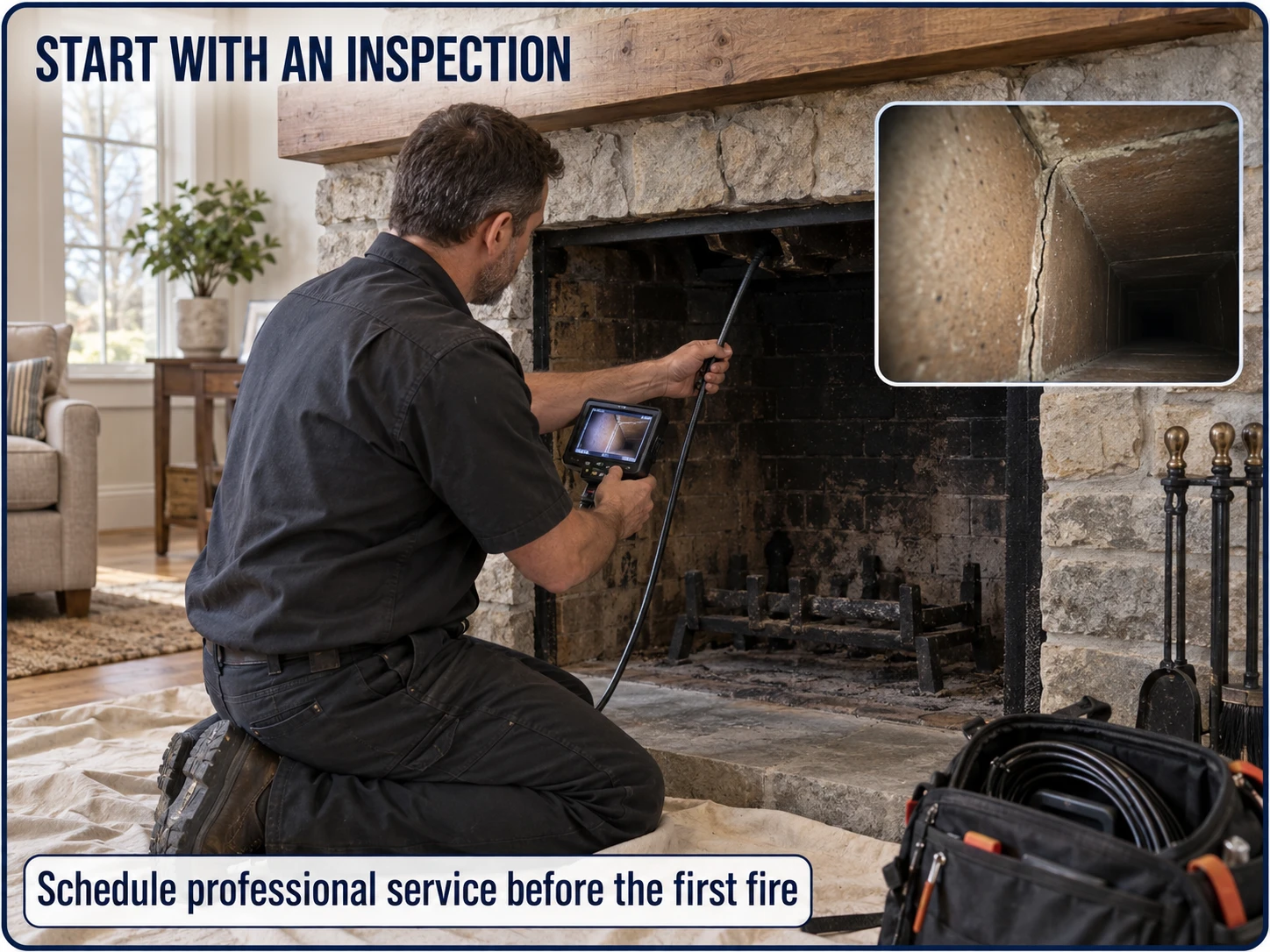
Start with a professional inspection of the fireplace, chimney, flue, and connected venting components.
Fuel-burning heating systems should be inspected regularly because problems inside the chimney are not always visible from the fireplace opening. An inspection can identify conditions that may affect safe operation before they become more serious.
Items that may need attention include:
- Creosote buildup
- Soot accumulation
- Bird or animal nests
- Leaves and other debris
- Cracked chimney liners
- Loose vent connections
- Damaged masonry
- Corrosion
- Water intrusion
- Missing or damaged chimney caps
If cleaning or repair is recommended, complete that work before regular seasonal fireplace use.
A homeowner visual check is useful, but it should complement rather than replace professional inspection.
Check for Creosote Before Burning Wood
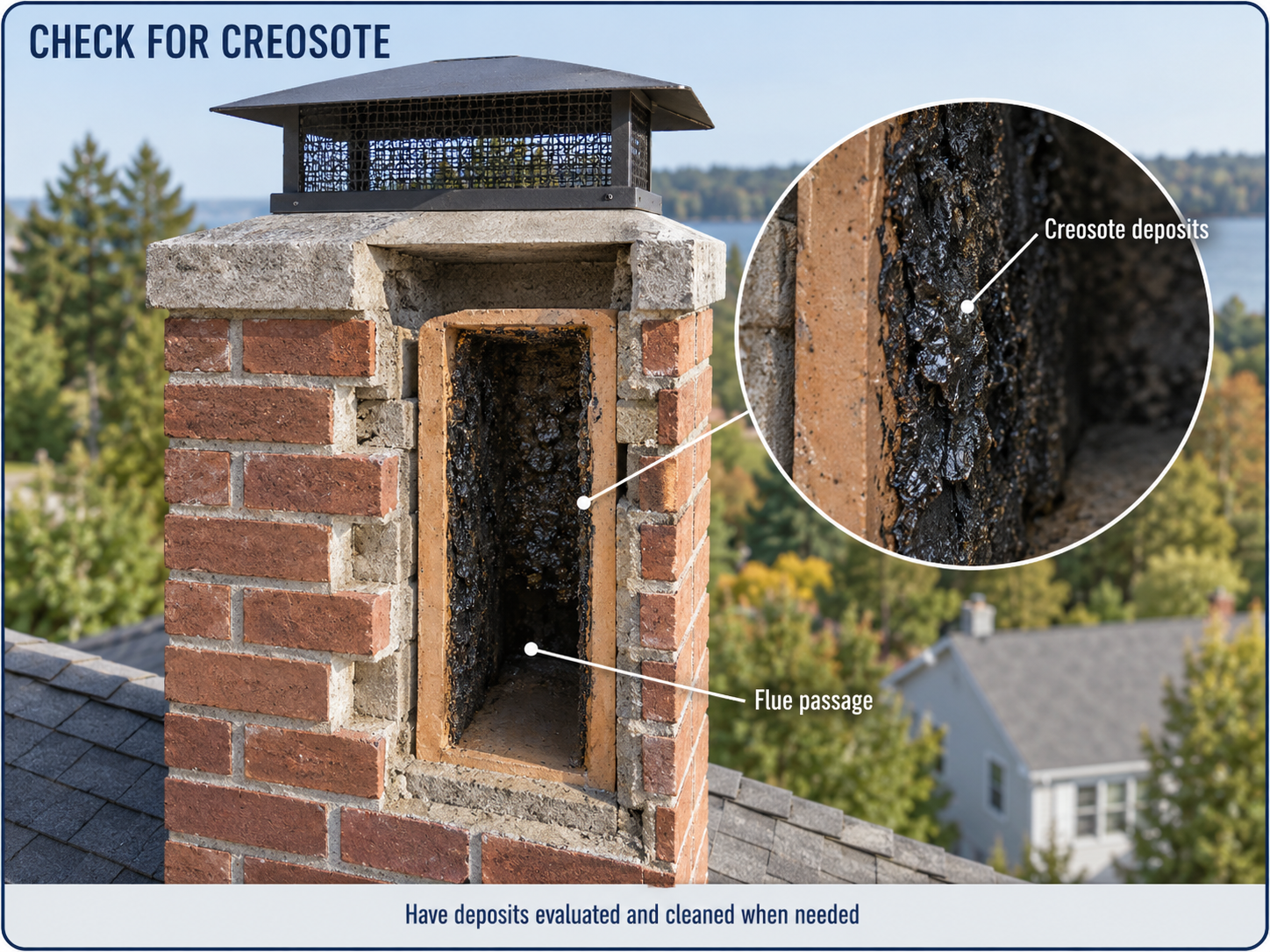
Creosote is a combustible residue that develops when smoke and other combustion products cool inside a chimney.
It can appear as loose soot, flaky deposits, sticky residue, or hard glazed material. The amount and condition of creosote depend on factors such as firewood moisture, chimney temperature, draft, and how the fireplace or stove is operated.
Heavy creosote buildup can contribute to chimney fires.
Before fireplace season, have accumulated deposits evaluated and cleaned when necessary.
Chimney brushes and rods should be matched to the flue material. Wire brushes may be appropriate for some masonry flues, while stainless steel liners and other chimney systems may require polypropylene or another non-metallic cleaning tool.
Do not assume that one chimney brush is appropriate for every venting system.
Inspect the Chimney Cap
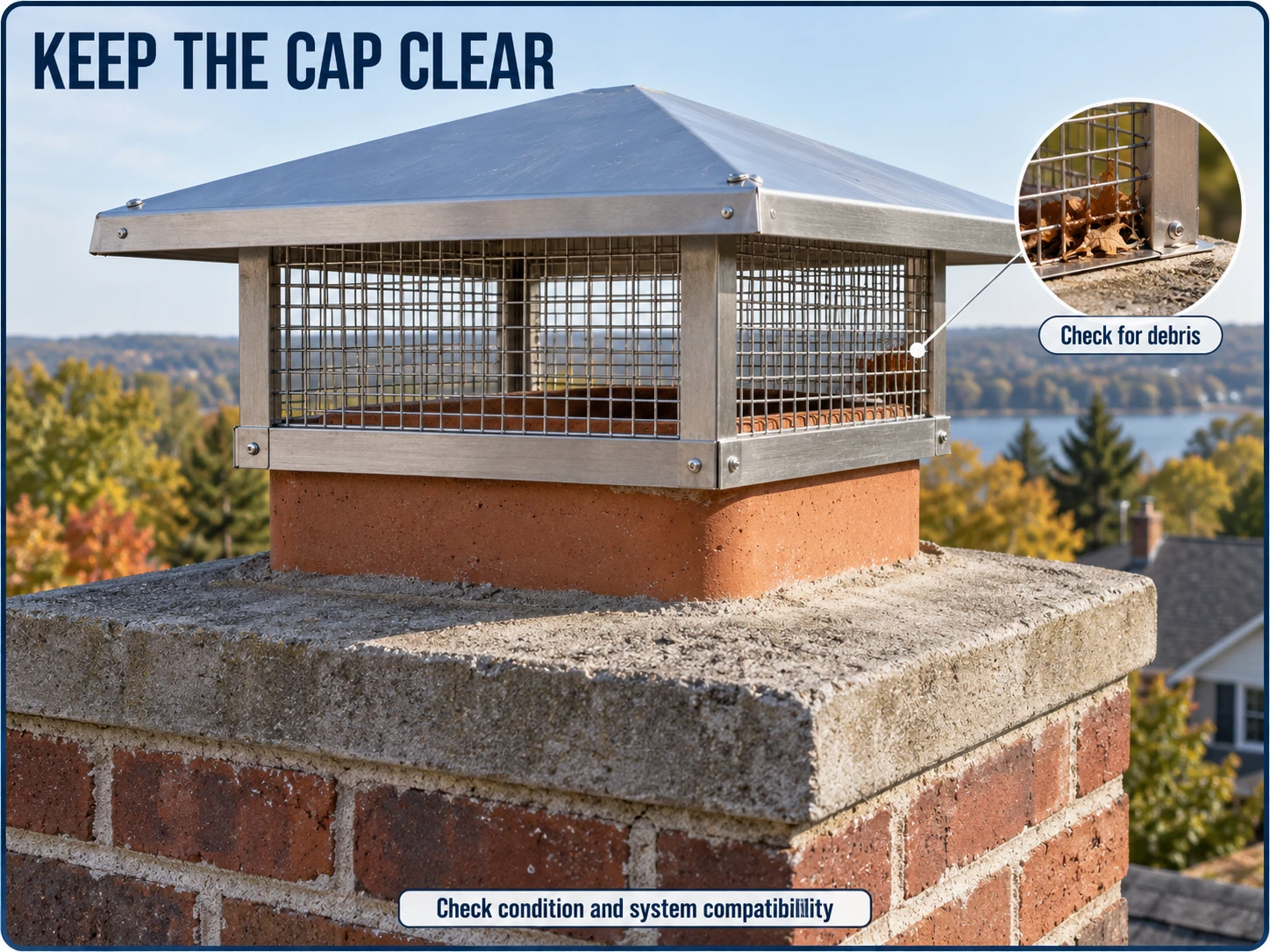
The chimney cap is exposed to rain, wind, snow, animals, and seasonal debris throughout the year.
From a safe location, check for:
- Missing or damaged cap
- Bent metal
- Loose fasteners
- Damaged screens
- Leaves or nests
- Heavy corrosion
- Soot or creosote buildup
The opening needs to remain clear enough for combustion gases to exit.
Factory-built chimney systems may require a cap designed specifically for that chimney family. DuraTech, DuraPlus, DuraChimney II, and other listed systems use components with system-specific dimensions and connections.
Do not replace a chimney cap based only on nominal pipe diameter.
Look at the Chimney Crown and Masonry
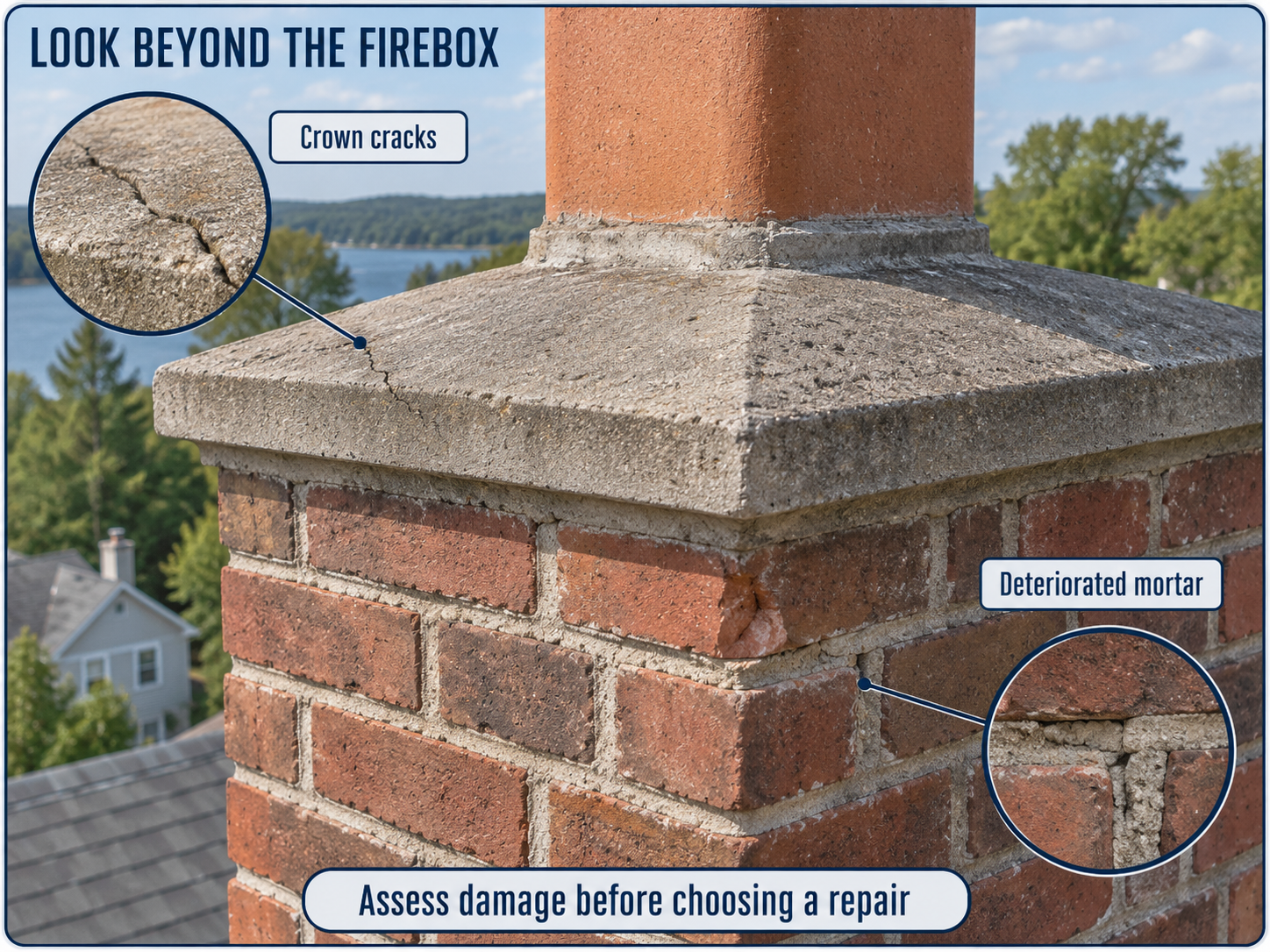
For masonry chimneys, inspect visible exterior surfaces for signs of weather-related deterioration.
Look for:
- Cracked crown surfaces
- Loose mortar
- Missing mortar joints
- Spalling or flaking brick
- White mineral staining
- Dark water marks
- Loose masonry
- Visible structural movement
The chimney crown is particularly important because it helps direct water away from the masonry below.
Minor surface deterioration on an otherwise sound crown may be suitable for a compatible crown repair coating. Larger cracks or loose sections may require more extensive masonry repair.
Do not cover structural damage simply because a coating or sealant can bridge the visible crack.
Check Flashing for Signs of Water Entry
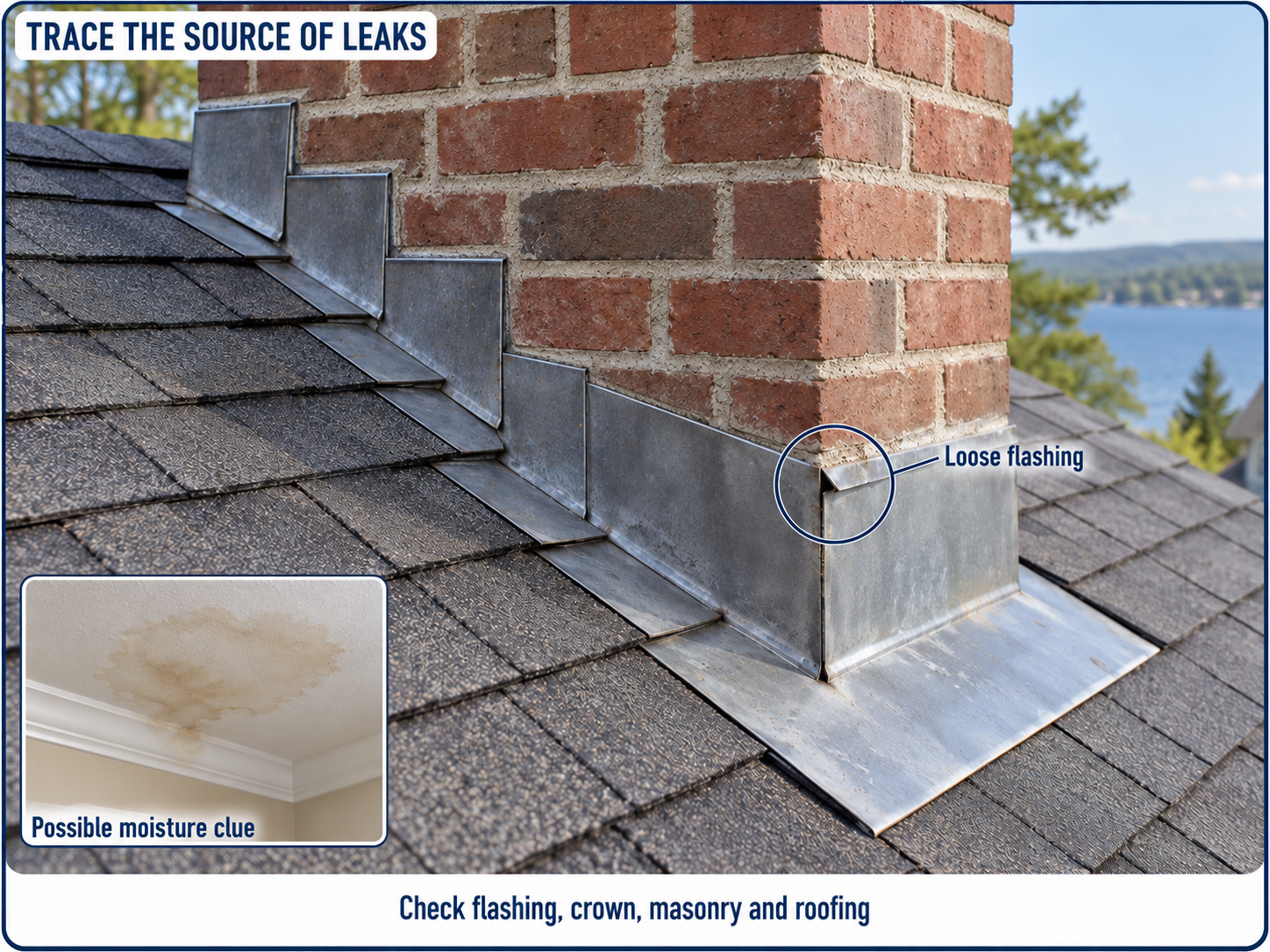
Flashing protects the area where the chimney meets the roof.
Check from a safe location for:
- Lifted flashing
- Damaged metal
- Gaps
- Failed sealant
- Rust
- Water staining
- Roofing deterioration near the chimney
Inside the home, watch for ceiling stains, peeling paint, damp masonry, or other moisture around the chimney.
Water near a chimney does not always mean the flashing has failed. Moisture can also enter through the crown, masonry, chimney cap, roofing, or another nearby building component.
Identify the source before applying a flashing sealant or masonry water repellent.
Inspect Factory-Built Chimney Components
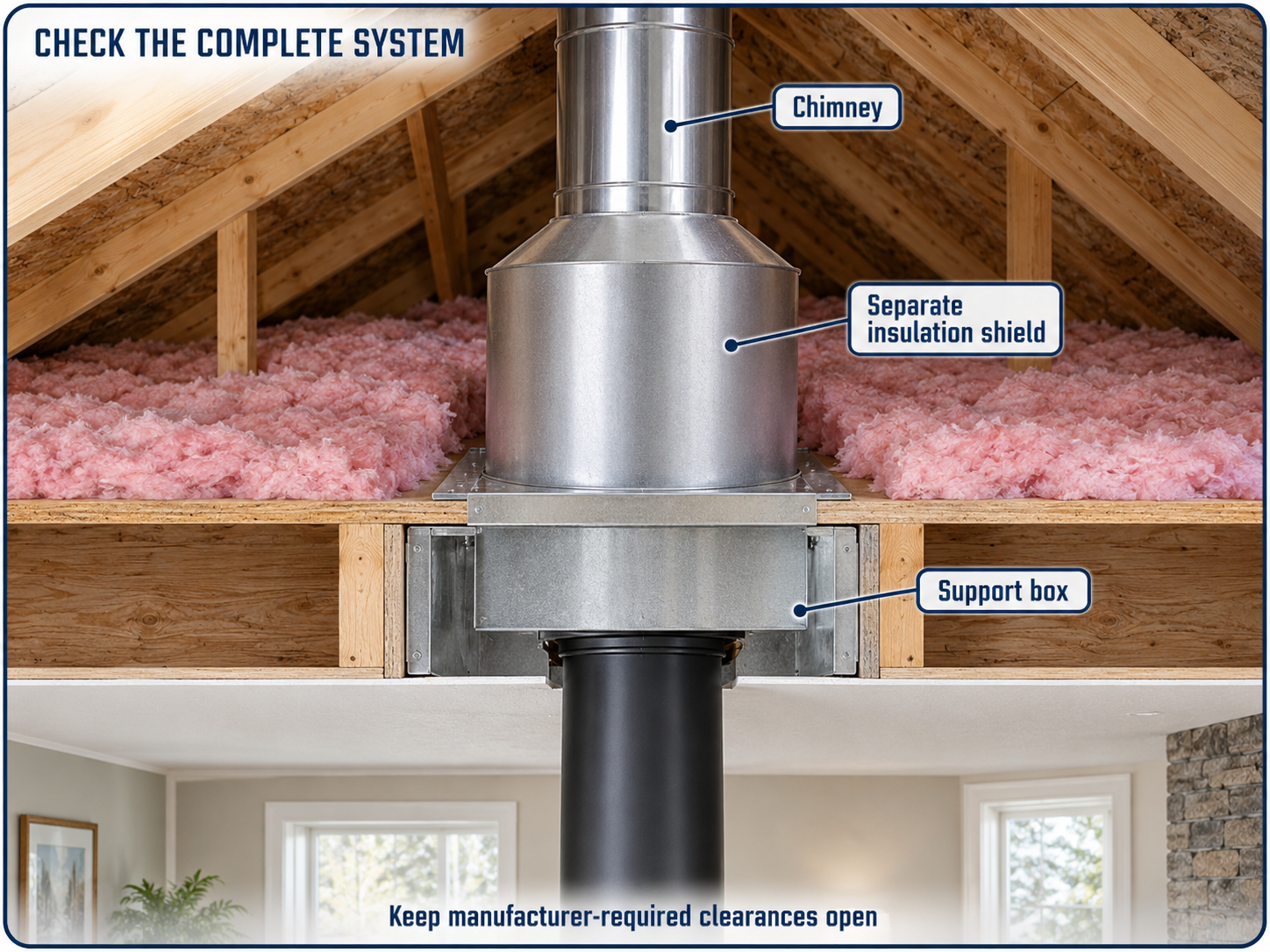
If your fireplace or stove uses a factory-built chimney, check accessible sections for signs of damage or movement.
Inspect:
- Pipe connections
- Wall straps
- Ceiling support boxes
- Firestops
- Attic insulation shields
- Roof supports
- Flashing
- Storm collars
- Chimney caps
Watch for corrosion, loose connections, missing supports, damaged pipe sections, or insulation entering required clearance spaces.
Factory-built chimney components are designed as coordinated systems. Parts from different systems should not be mixed simply because their diameters appear to match.
Always identify the manufacturer, chimney series, diameter, and required component before ordering a replacement.
Keep Required Clearances Open
A chimney can become unsafe even when the pipe itself is undamaged if combustible materials move too close to it.
Check accessible areas where the chimney passes through ceilings, attics, walls, or roof framing.
Look for:
- Insulation pushed against chimney pipe
- Stored boxes near the chimney
- New framing
- Added wiring
- Renovation materials
- Debris inside required clearance areas
Class A chimney systems have manufacturer-specified clearances that must remain open.
Do not fill those spaces with spray foam, insulation, wood blocking, mortar, or other materials unless the chimney manufacturer specifically approves the configuration.
Check Your Stovepipe Connections
Wood stove installations may use visible connector stovepipe between the appliance and the insulated chimney.
Before the season begins, inspect accessible sections for:
- Loose joints
- Open seams
- Rust
- Heavy discoloration
- Soot leakage
- Creosote deposits
- Damaged elbows or adapters
Single-wall stovepipe such as DuraBlack and insulated Class A chimney serve different purposes.
Connector stovepipe is generally used inside the room between the appliance and chimney transition. It should not be substituted for Class A chimney where the vent passes through combustible construction.
Maintain the clearance specified for the particular connector-pipe system.
Test the Fireplace Damper
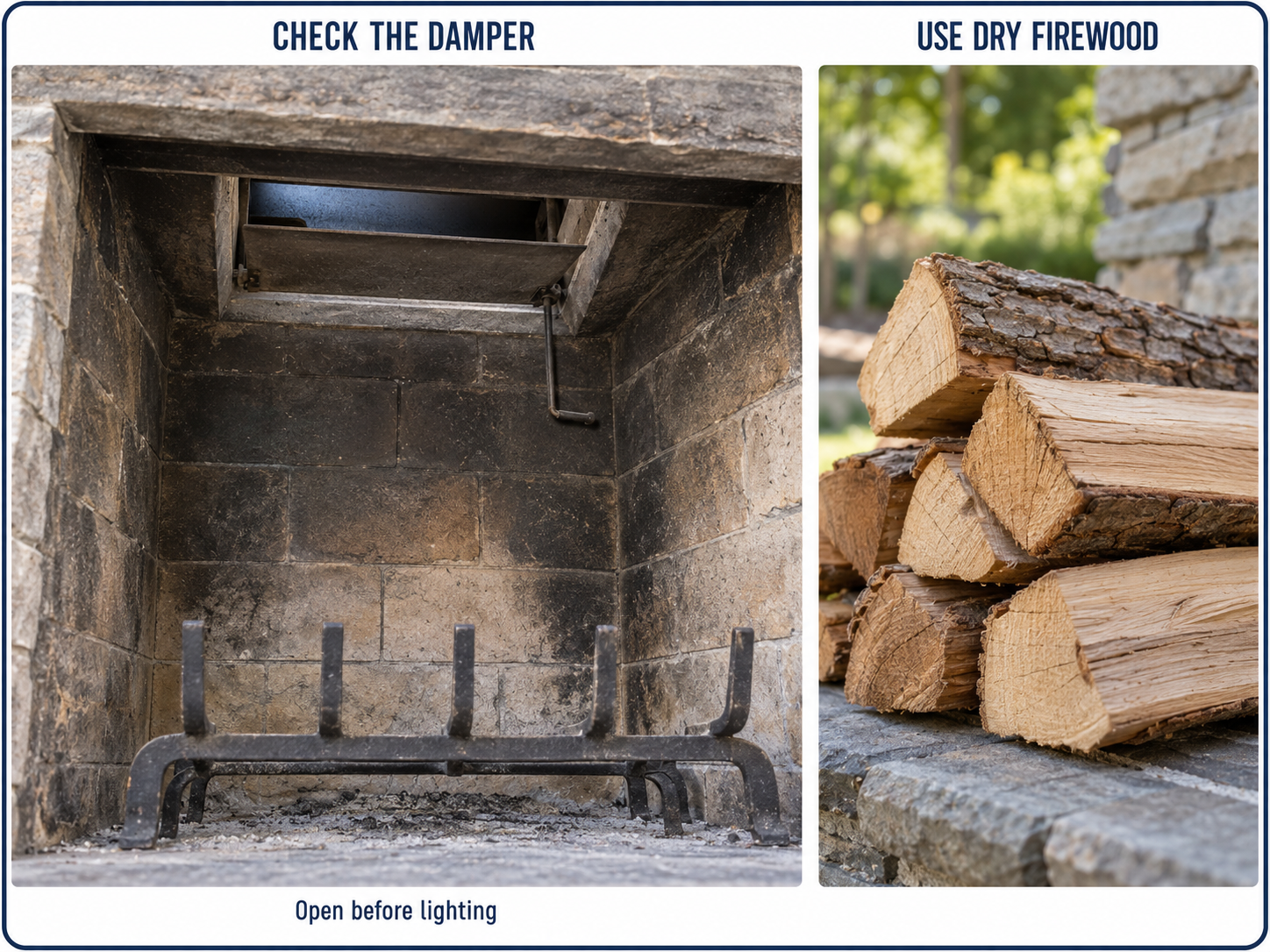
For a traditional wood-burning fireplace, confirm that the damper opens and closes properly before lighting the first fire.
Remove visible debris and check that the mechanism moves freely.
Open the damper before lighting the fire and keep it open while the fire is burning and until the ashes have cooled.
If smoke enters the room with the damper fully open, stop using the fireplace and investigate the cause.
Possible issues may include:
- Chimney blockage
- Excessive creosote
- Poor draft
- Damaged venting
- Insufficient combustion air
Persistent smoke spillage should not be treated as normal.
Burn the Right Firewood
Fireplace operation affects chimney maintenance.
For a wood-burning appliance, use dry, seasoned firewood and avoid prolonged smoky, smoldering fires.
Do not burn:
- Trash
- Plastic
- Painted wood
- Pressure-treated lumber
- Household waste
- Coated wood products
Never use gasoline, kerosene, lighter fluid, or another flammable liquid to start or restart an indoor fire.
Using appropriate fuel and operating the fireplace according to its instructions can help reduce conditions that contribute to excessive creosote buildup.
Test Smoke and Carbon Monoxide Alarms
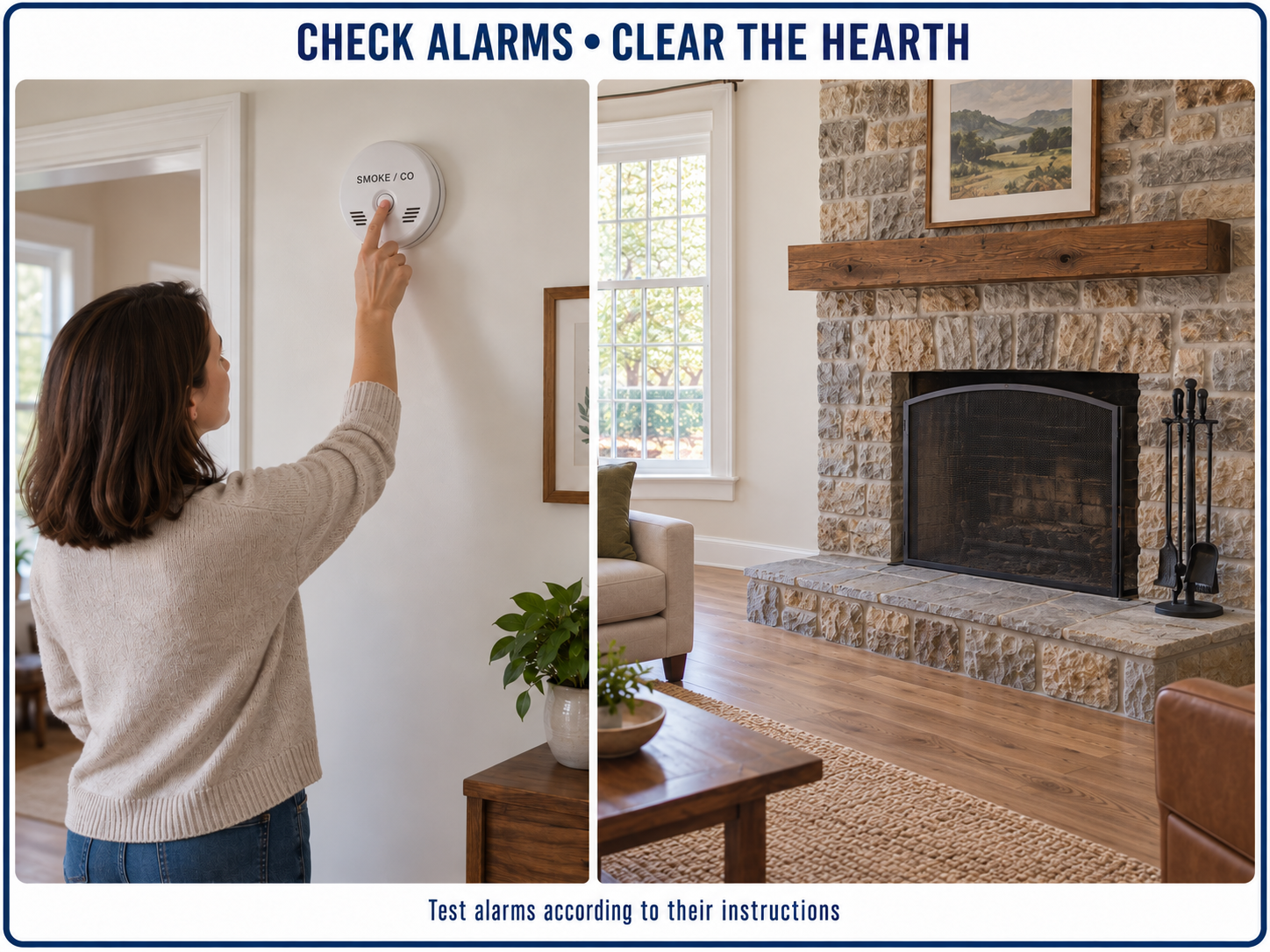
Chimney preparation should include your home's alarms.
Test smoke and carbon monoxide alarms according to manufacturer instructions before heating season.
Make sure:
- Smoke alarms are working
- Carbon monoxide alarms are working
- Batteries are replaced when required
- Expired alarms are replaced
- No alarm has been disabled or covered
Fuel-burning appliances can produce carbon monoxide when combustion or venting problems occur.
If a carbon monoxide alarm sounds, leave the home and follow emergency procedures.
Keep the Hearth Area Clear
Keep combustible items away from fireplaces and wood stoves.
Pay attention to:
- Furniture
- Rugs
- Firewood
- Newspapers
- Curtains
- Blankets
- Toys
- Holiday decorations
Seasonal decorations can gradually move closer to the fireplace as fall turns into winter, so repeat this check regularly.
Use an appropriate fireplace screen or enclosure to help contain sparks and embers from an open wood-burning fireplace.
Prepare for Safe Ash Disposal
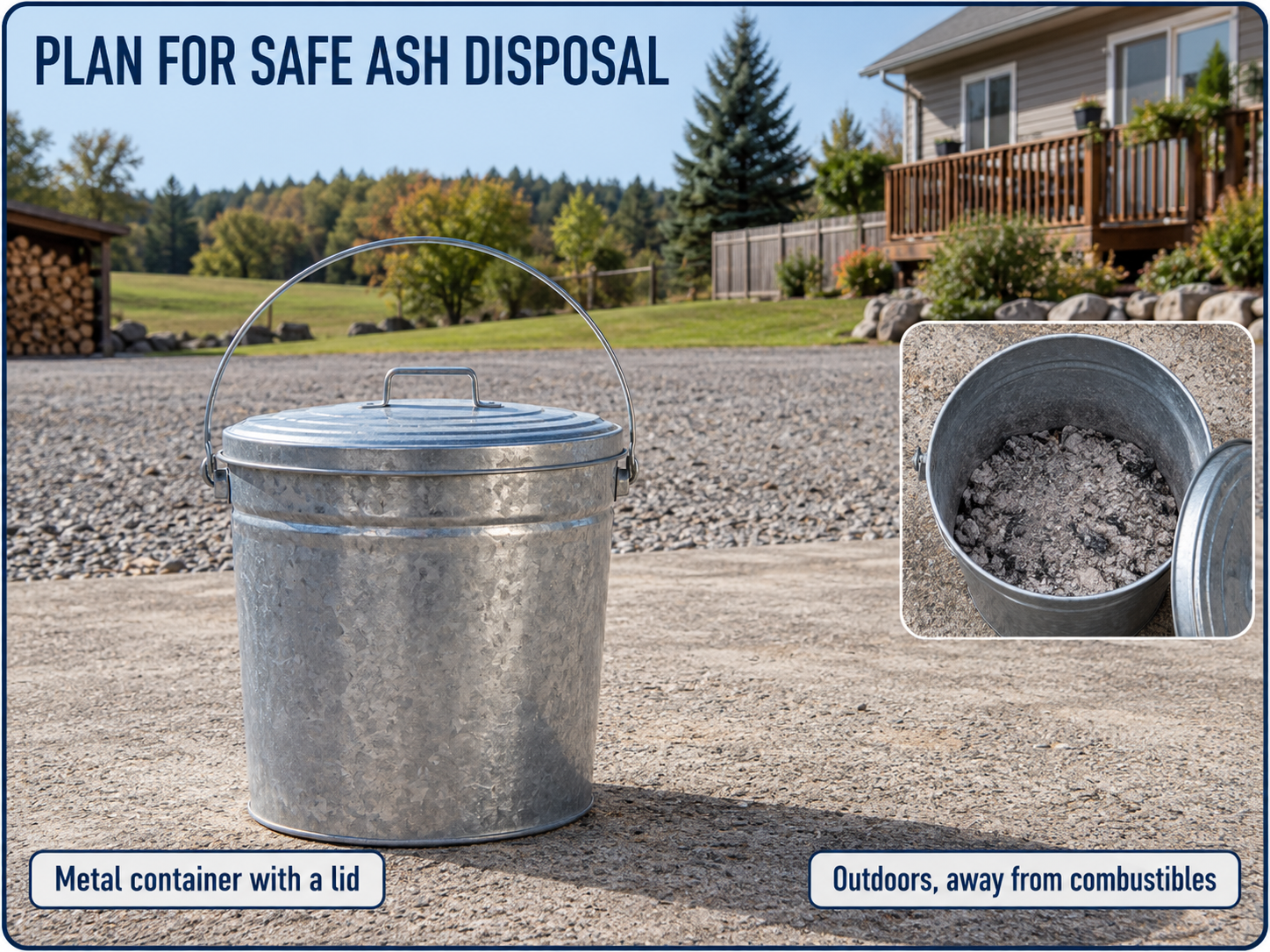
Ashes can remain hot long after a fire appears extinguished.
Have a metal container with a tight-fitting lid ready before fireplace season.
Once ashes have cooled enough for removal:
- Transfer them into the metal container
- Close the lid
- Place the container outdoors
- Keep it away from combustible materials
Do not put potentially warm ashes directly into plastic trash bins, cardboard boxes, paper bags, leaf piles, or other combustible containers.
Hidden embers may remain hot for hours.
Complete Repairs Before Your First Fire
Do not postpone a known chimney problem simply because the fireplace still appears to operate.
Before regular use begins, address:
- Heavy creosote
- Cracked liners
- Loose masonry
- Failed mortar
- Damaged crowns
- Leaking flashing
- Missing chimney caps
- Corroded stovepipe
- Loose chimney supports
- Damaged firestop components
Modern Hearth & Home carries chimney brushes and rods, chimney caps, chimney liners and components, DuraVent venting products, crown repair coatings, flashing sealants, masonry water repellents, and other maintenance products for compatible installations.
Match every replacement product to the exact chimney system and intended repair.
Make National Chimney Safety Week Your Annual Reminder
National Chimney Safety Week 2026 falls on September 27 through October 3, just before many households begin using fireplaces and wood stoves more regularly.
Use the week as an annual reminder to schedule your chimney inspection, remove creosote when needed, check the cap and exterior masonry, inspect venting components, test alarms, and complete repairs before the first fire.
A chimney does not need to show an obvious problem to deserve attention. Regular inspection and maintenance help identify changing conditions before fireplace season is fully underway.